Protection against physical violence
Against casual offenders who work with pure physical strength – jumping, pushing up, pushing apart. There is no tested protection against tools.
Recommended only for hard-to-reach windows in upper floors.
The resistance class shows which tool and how long a window can withstand a break-in attempt. Watch as the same window locks more locking points as the class rises – from mere physical strength (RC1) to screwdrivers (RC2) to the crowbar (RC3).
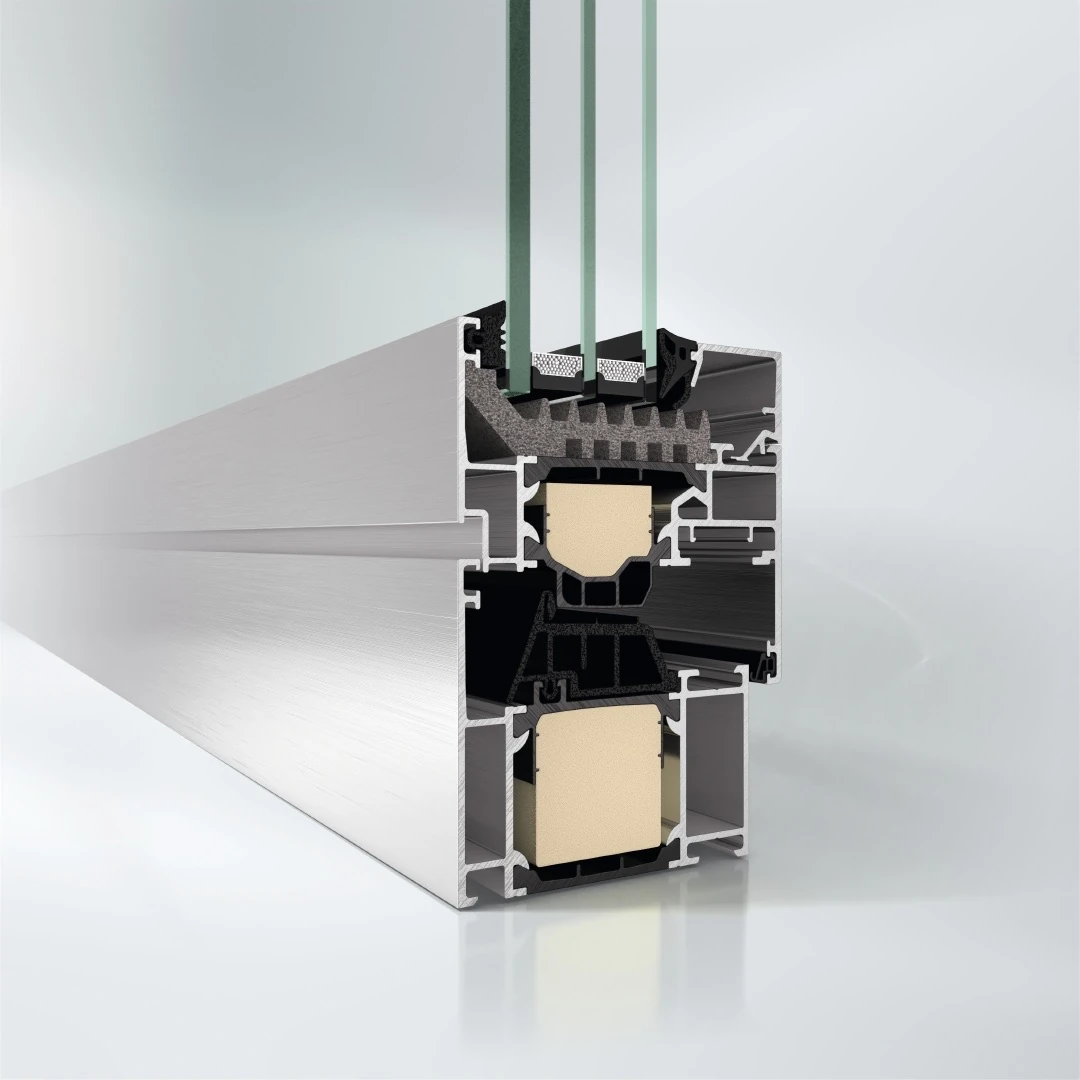
A secure window does not consist of a single component. Only the coordinated combination of stable aluminum frame, locking, glazing and professional installation creates effective protection.
Multiplicity-chamber, torsionally rigid aluminum profiles also carry large safety glazing.
Several closing points make it difficult to lever open the sashes and frames.
Laminated safety glass holds fragments together and increases resistance.
A pressure-resistant fastening securely transfers forces into the structure.
The appropriate security design depends on the location, accessibility and use of the building. Ground floor, balcony and hard to see sides usually require more protection than upper floors.

The European standard DIN EN 1627 divides burglar-resistant windows into resistance classes (RC for short). They differ in the assumed perpetrator type, in the allowed tool and in the time that the window must withstand an attempt to break open. In private housing, especially RC1 N to RC3 are relevant.
Against casual offenders who work with pure physical strength – jumping, pushing up, pushing apart. There is no tested protection against tools.
Recommended only for hard-to-reach windows in upper floors.
Against casual offenders with simple leverage. RC2 is considered the entry and minimum recommendation of the police for all easily accessible windows.
Recommended for ground floor, basement, balcony and terrace doors. Lockable grip duty.
Against more experienced perpetrators who additionally set a crowbar. Higher static test load (6,000 N) and longer resistance time.
For exposed layers, ground floor in hazard areas and higher protection requirements.
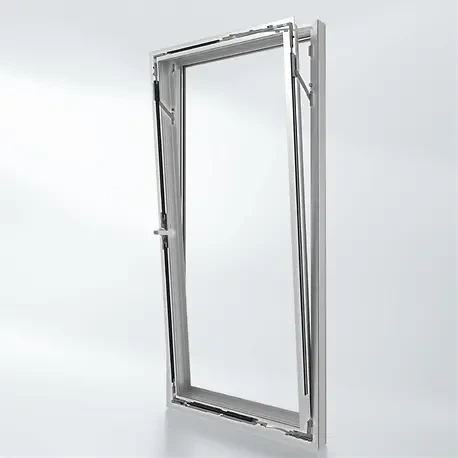
Important: A resistance class always applies only to the Fully tested windows – Profile, fitting, handle, glazing and attachment together. A single component does not yet yield an RC class. The term “N” means normal glazing without tested safety glass.
Only the tested fitting turns a window into a burglary-resistant. The following original Schuco components show what is important for each resistance class – from the handle to the peripheral mushroom-head locking system. Click to enlarge.
Open and lock the sash. Without additional security, it alone does not offer tested burglary protection – the basic equipment.
A push button must be pressed to rotate and locks the handle against unintentional or manipulated turning back.
Locks the handle by key and prevents turning back after drilling. Mandatory for RC2, usually with anti-drilling protection.
The frame-side counterpart in which the mushroom-head locking pins of the sash engage. Stable closing pieces interlock during the open-lever test.
Guides the locking mechanism around the sash corner and carries the mushroom-head-shaped pins. They grip behind the locking piece and resist levering – the core of any RC lock.
Lower pivot bearing supporting the sash weight. Stable bearings hold the sash securely in position even under lever forces.
We manufacture with the intrusion-resistant systems of leading suppliers. Both offer tested resistance classes up to RC3 – each as a fully certified interplay of profile, fitting and glass.
Under “Schüco Secure”, Schüco bundles tested burglar resistance – from the circumferential mushroom-head locking system to lockable handles and safety glazing. Schüco recommends RC2 as the standard for residential buildings; for increased risk, RC3 withstands breaking with crowbar and a static test load of 6,000 N.
Reynaers integrates burglar resistance directly into its window and sliding systems. Systems such as Concept System 77 and MasterLine 10 are available in RC2 to RC3; Sliding systems such as ConceptPatio 155 as a burglary-resistant RC2 variant, facades such as ConceptWall 50 in RC2 to RC3.
Sources: DIN EN 1627 (resistance classes), schueco.com (Schüco Secure, burglar resistance) and reynaers.de (product systems). Fitting illustrations: original Schüco components. The actually achievable resistance class depends on the tested system configuration and the professional assembly.
Building type, location and accessible window areas determine the need for protection.
The resistance class is chosen to suit the use and possible specifications.
The profile, fitting, handle, glass and mounting shall support the same protective effect.
Careful assembly and documentation receive the planned protection.
We develop a sensible solution for buildings, use and budget.