ProductsCompanyPartnersInformationAluminum vs. Wood WindowsContact
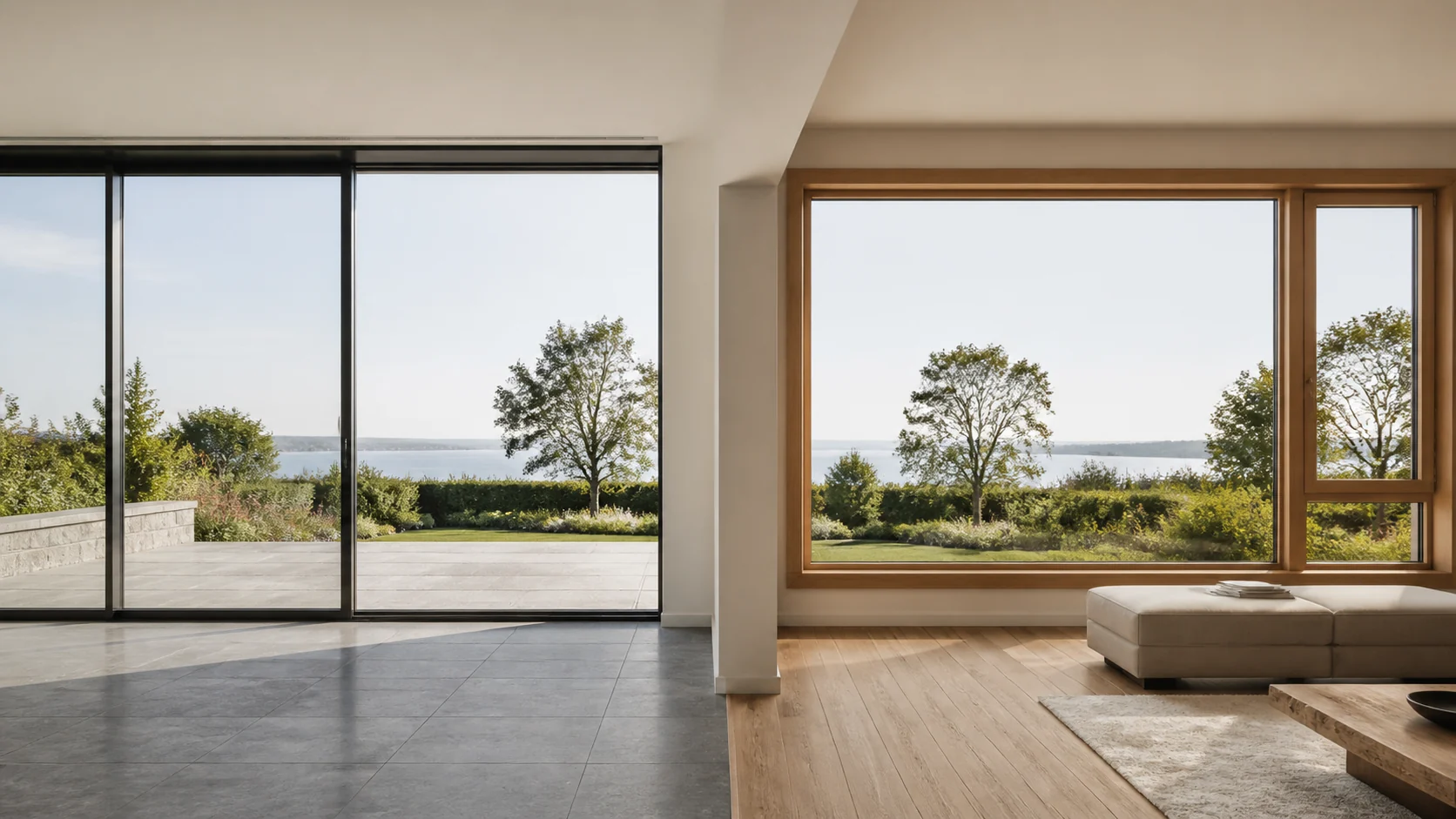
A slim aluminum panoramic window beside a warm wood window
Guide · Material comparison

Aluminum or wood windows?

A practical comparison of thermal performance, care, aesthetics and large-format glazing—so material, architecture and daily use work together.

The honest short answer

Both materials can make excellent windows.

Wood is naturally insulating as a frame material. Aluminum can also perform at a high level when it uses thermally broken profiles. The material alone does not determine the outcome: the final U-factor describes the complete window—frame, glass and edge conditions. Installation, air sealing, hardware, orientation and shading matter too.

Side-by-side comparison

Aluminum and wood at a glance.

These are typical strengths, not a substitute for product testing or project-specific engineering.

CriterionAluminum windowsWood windows
Thermal performanceThe thermal break is decisive. Modern systems can achieve demanding whole-window U-factors; the complete construction is what matters.Wood is naturally insulating. Frame section, glazing and the edge spacer still determine the whole-window U-factor.
Large openingsEspecially suited to slim sightlines. High stiffness supports large, heavy and highly exposed elements, always depending on system and size.Strong for many classic and demanding openings. Very large units require careful planning of species, section, construction and reinforcement.
Finish & carePowder-coated finishes are durable. Regular cleaning and functional checks of seals and hardware remain good practice.Coatings protect the timber. Inspection and periodic coating care preserve weather protection; damaged surfaces can be renewed.
DesignReduced, contemporary appearance. Slim frames, large glass areas and extensive color options suit modern architecture.Warm, tactile character. Wood gives interiors a distinctive material presence in traditional and contemporary buildings.
Environmental impactNo universal score. Recycled content, finish, glass area, transport and service life should be evaluated for the actual project.No universal score. Sourcing, coatings, maintenance, repairability and the detailed construction all belong in the evaluation.
Choose for the project

When each material is a natural fit.

01

Aluminum for panorama and precision

Aluminum is a strong choice when generous glazing, slim sightlines, high loads or a reduced architectural expression are central to the brief.

  • Large window and sliding systems
  • Clean, contemporary façades
  • Many color and surface options
02

Wood for warmth and character

Wood is especially convincing where natural materiality, visible texture and a warm interior atmosphere shape the concept.

  • Material-rich interiors
  • Renovation and characterful architecture
  • A plan for periodic surface care
03

System and installation first

For energy performance, acoustics and durability, the tested construction and correct installation matter more than a general material verdict.

  • Check U-factor, acoustic and air/water data
  • Coordinate glass and shading
  • Plan access for maintenance
Compare technically

The U-factor applies to the whole window—not only to its frame.

The frame, glazing and edge spacer all contribute to a whole-window U-factor. A fair comparison therefore uses values for the intended size and configuration. Also ask how the installation connects to the wall: even a well-designed window needs the right air, water and thermal detailing to perform as intended.

Next step

Compare systems around your project.

We can help with opening sizes, glass, color and the technical requirements of your architecture.